Protect Plant and Warehouse Roofs From Leaks, Ponding, and Worn Plies
Shively commercial roofing for industrial plants, warehouses, and the retail buildings along Dixie Highway, from built-up roof repairs to full replacements.
Shively Commercial Roofing for Older Industrial Buildings
Shively commercial roofing means older plants and warehouses. Their roof sections rarely match.
Shively is a city in southwestern Jefferson County, with Dixie Highway running through it. Its commercial building stock leans industrial: plants, warehouses, and shops, many of them built decades ago with built-up roofs and later additions roofed in whatever was common at the time.
That history shows on the roof. We often find two systems meeting at an expansion joint, gravel built-up roofing next to single-ply, and old penetrations left behind when equipment was removed. Sorting out those transitions is where Shively roof work starts.
Built-up roofs with gravel surfacing
Transitions between old and new sections
Abandoned curbs and capped penetrations
Plant and warehouse schedules
Common Problems
Roof Problems on Shively Plants and Warehouses
These four problems come up again and again on older Shively industrial and commercial roofs.
Built-Up Roofs
Blistered and Split Plies
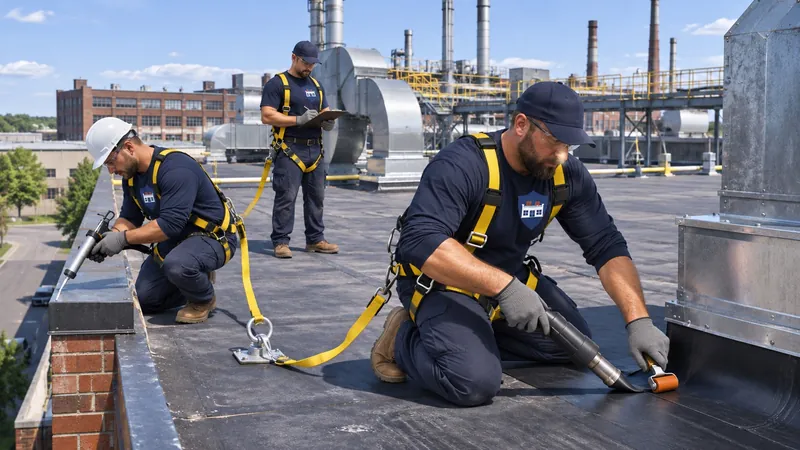
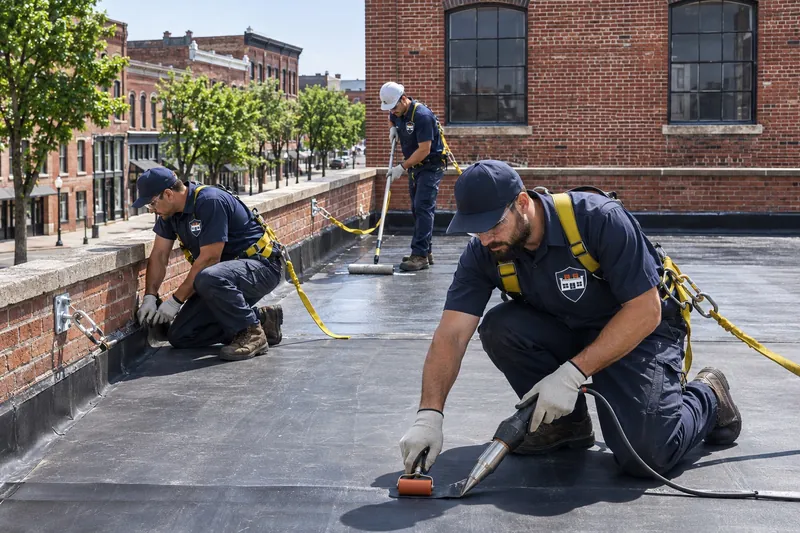
Trapped moisture swells into blisters, and movement splits old plies. Small areas are cut and repaired; widespread damage means replacement. Small blistered areas are cut and repaired, and cores show whether the rest of the roof is dry.
Usually Means: Moisture is trapped between old plies
Open Expansion Joints
Joints between an original building and its additions move with the seasons.
Abandoned Penetrations
Curbs and pipes left from removed equipment are often capped poorly.
Gravel-Clogged Drains
Loose gravel from built-up roofs washes into drains and strainers.
Loose Gravel Stop
Old gravel stop lifts at the edge and lets water under the plies.
Why It Pays
Benefits of Planned Roof Work for Shively Building Owners
Shively buildings with several roof sections gain the most from a plan that treats each section on its own.
On The Roof
Deck Saved From Rust
Stopping water between the plies keeps the steel deck from corroding under the roof.
Transitions Sealed
New joint covers and flashing where old and new roofs meet stop the leaks that patches at the seam kept missing.
Inside The Building
Production Kept Dry
Closing transition and penetration leaks protects equipment and stock on the plant floor.
Stock Kept Dry
Closing leaks over racking and shipping areas keeps water off stock in older Shively warehouses.
For Planning And Budget
Section-by-Section Budgets
A scope split by roof section lets you replace the worst area first and repair the rest.
Worst Section First
Fixing the wettest roof section now and repairing the rest spreads replacement cost over several budget years.
Services Here
Commercial Roofing Services in Shively for Plants and Shops
These services match the industrial and older commercial buildings that make up most of Shively's roofs.
Call and describe where the old building meets the addition. Transition leaks are among the most common we fix in Shively, and they are often a one-visit repair.
Pleasure Ridge Park and Riverport, south and west of Shively, are in our service area too.
Shively Commercial Roofing Questions
Answers for Shively plant, warehouse, and retail owners.
Local Buildings
Can an old built-up roof in Shively be repaired?
Often, yes. If cores show the plies and insulation are dry away from the leaks, blisters can be cut and patched, splits repaired, and flashing rebuilt. When water runs between the plies across large areas, a new single-ply roof is the better investment.
Do you roof metal buildings in Shively?
Yes. We repair and replace metal panels, fasteners, laps, and trim on Shively warehouses and shops, and install new metal roofs where the old panels are rusted through.
Roof Condition
Do you work around plant shifts in Shively?
Yes. Roof work on Shively plants is scheduled with your maintenance lead around shift changes and production runs. Areas over sensitive equipment are worked when that equipment is down or protected.
How do you fix leaks where an addition meets the original building?
We open the expansion joint or transition, check the wall and both roof edges, and install a new joint cover or flashing that lets the two sections move independently. Patching over the joint with sealant only lasts a season.
Membranes and Systems
How long does a built-up roof last?
A built-up roof that is kept up can last decades. Gravel surfacing protects the plies from sun, and regular flashing and drain repairs keep water from getting between them. Once the plies blister and split across the roof, replacement makes more sense.
Do you remove old rooftop equipment curbs?
Yes. Abandoned curbs and pipe stubs are removed, the deck opening is closed, insulation is filled in, and the roof is patched to match the surrounding system. That eliminates a common source of leaks on older Shively buildings.