Seal Parapet Walls and Old Counterflashing Before Water Gets Into the Brick
Butchertown commercial roofing for the older brick industrial and warehouse buildings east of downtown Louisville, from parapet flashing to full replacements.
Butchertown Commercial Roofing for Old Brick Industrial Buildings
Butchertown commercial roofing is brick and parapet work. The masonry tells the story.
Butchertown sits just east of downtown Louisville along Beargrass Creek, and many of its commercial buildings are older brick industrial and warehouse structures, some converted to offices, restaurants, and studios. Their roofs are low-slope and hidden behind brick parapet walls.
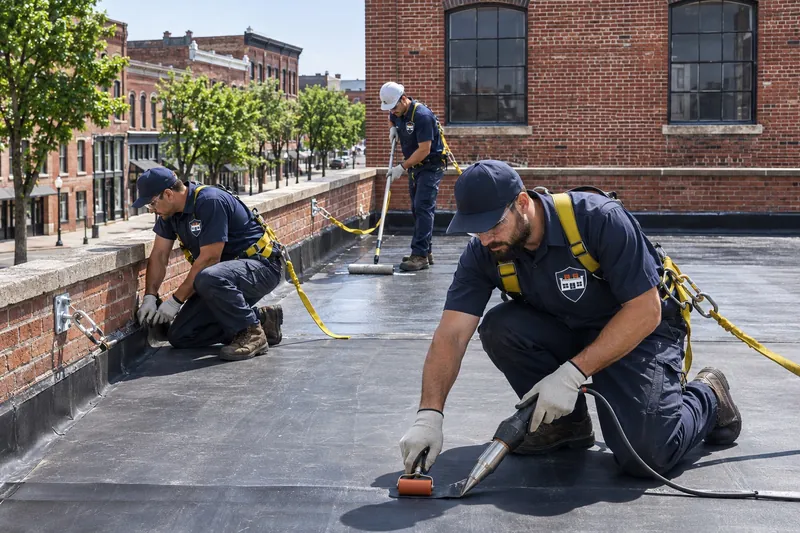
Those parapets are where Butchertown roofs fail. Counterflashing set into mortar joints loosens as the mortar wears, coping joints open, and water gets behind the base flashing. Internal drains and several old roof layers add to the work.
Brick parapets and coping
Counterflashing set in mortar joints
Internal drains and conductor lines
Several old roof layers on the deck
Butchertown roof work often runs alongside renovation. Coordinating the roof with masonry and interior work keeps new finishes from getting wet and avoids cutting into a brand new roof later.
Common Problems
Roof Problems on Butchertown Brick Buildings
These four problems turn up on most older Butchertown roofs.
Masonry
Loose Counterflashing
Metal counterflashing tucked into mortar joints works loose as the mortar wears, letting water behind the base flashing. New counterflashing is set into fresh mortar cuts so it stays tight to the brick.
Usually Means: Mortar joints at the parapet have worn
Open Coping Joints
Stone or metal coping on top of the parapet opens at its joints, and water soaks down into the wall.
Clogged Internal Drains
Old internal drains collect debris and corrode, slowing water off the roof and backing it up against the walls.
Wet Layers Under the Top Roof
Older recovers trap water between layers.
New Units on Old Roofs
Units added for offices and restaurants sit on curbs cut into old roofs, and their flashing is often rushed.
Why It Pays
Benefits of Proper Roof Work for Butchertown Building Owners
On older brick buildings, a good roof protects the masonry as well as the space inside.
On The Roof
Masonry Kept Dry
Tight flashing and coping keep water out of the brick, which slows mortar wear and wall damage.
Deck Problems Found Early
Checking the deck during replacement catches weak spots while the roof is open and repairs are simple.
Inside The Building
Renovations Protected
A sound roof protects finished interiors in converted buildings, where leaks damage more than an old warehouse floor.
Finished Interiors Protected
Tight parapet flashing keeps water out of renovated offices, restaurants, and studios in converted buildings.
For Planning And Budget
Clear Layer Count
Knowing how many roofs sit on the deck shows which options are allowed before any money is spent.
Roof Timed With Renovation
Coordinating the roof with masonry work avoids cutting into a new roof to fix parapets later.
Services Here
Commercial Roofing Services in Butchertown for Older Buildings
These four services match Butchertown's older brick buildings.
Four steps, with extra attention to the masonry around the roof.
1
Inspect Your Roof
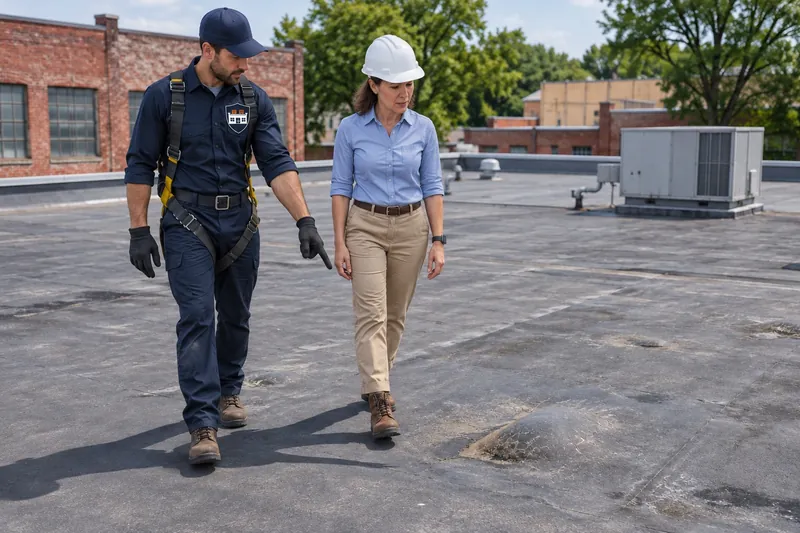
We walk the roof and every parapet, check the counterflashing and coping, look at the deck from inside, and count layers with cores.
2
Written Scope and Price
The written scope separates roof work from flashing and masonry details, with photos and a price for each roof option.
3
Schedule Around the Building
Narrow streets and street parking decide where the crane and dumpster go, so we plan staging with you and the neighbors in mind. Parapet coping is protected where hoists and ladders rest against it.
4
Final Roof Walk
At the end, each parapet and drain is checked again, the street is swept, and you walk the finished roof with us.
NuLu, Smoketown, and Shelby Park, close to Butchertown, are in our service area too. Their older brick buildings get the same parapet and counterflashing checks.
Butchertown Commercial Roofing Questions
Answers for owners of older brick buildings in Butchertown and the districts near downtown.
Roof Condition
Do you work on older brick buildings in Butchertown, Portland and Germantown?
Yes. In Butchertown especially, many commercial roofs sit behind brick parapets with counterflashing set in the mortar, internal drains, and several old roof layers. We check that masonry detail and the deck closely, since that is where these roofs fail.
Why does a brick parapet wall leak?
Water gets in through open coping joints at the top, through loose counterflashing in the mortar, or behind base flashing pulled from the wall. Fixing the parapet means sealing all three, not only patching the roof below it.
Membranes and Systems
Can old roof layers stay on a Butchertown building?
Only if there is a single layer and cores show it is dry. Louisville Metro does not allow a recover over two or more existing layers, and wet layers always come off before a new roof goes on.
Do you repair the brick itself?
Our work covers the roof, flashing, coping, and counterflashing cut into the mortar. If the parapet brick or mortar needs rebuilding beyond that, we point it out in the report so a mason can handle it.
Planning the Work
Are internal drains on old buildings worth keeping?
Usually, yes. Internal drains on Butchertown buildings can be cleared, fitted with new drain bodies set flush with the roof, and connected to the existing leaders, which avoids rerouting water over the parapet.
Can you replace a roof on a converted building with tenants inside?
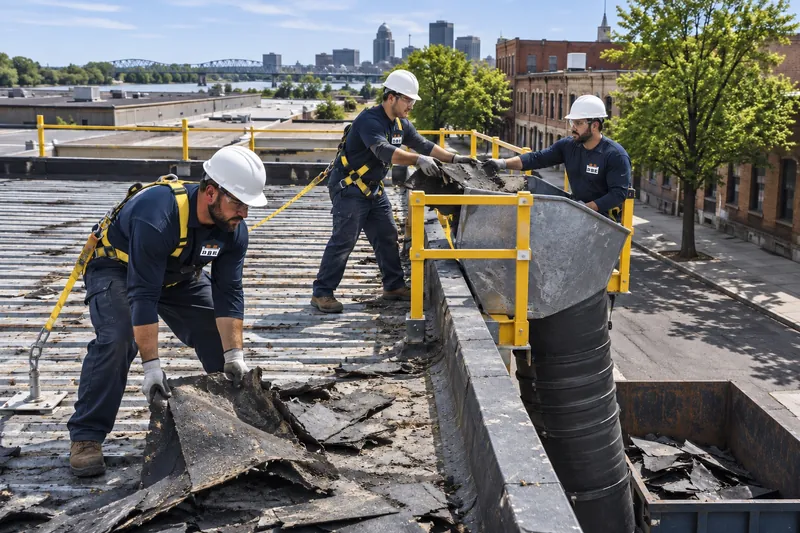
Yes. Work moves in sections sealed each day, noisy tear-off is scheduled around tenant hours, and debris comes down a chute into a dumpster placed with street parking in mind.