Clifton Commercial Roofing Where Neighboring Roofs Meet
Clifton commercial roofing happens shoulder to shoulder. Shared walls cause most leaks.
Clifton runs along Frankfort Avenue east of downtown Louisville, and its commercial buildings are mostly storefronts, restaurants, and small offices built close together. Many share a wall with the building next door, and their roofs step up or down at that wall.
That shared wall is where Clifton roofs leak most. Flashing at a step-down between two buildings belongs partly to each, and patches from both sides rarely tie together. We repair the joint as a single detail so it stays watertight from either side.
Shared party walls
Step-downs between roofs
Storefronts and restaurants
Small drains and scuppers
Clifton roofs are small, so a single clogged scupper or failed step-down affects the whole building. Small roofs also mean repairs and replacements move quickly once the cause is clear.
Common Problems
Roof Problems on Clifton Commercial Buildings
Clifton's close-set storefronts share four common problems.
Shared Walls
Failed Step-Down Flashing
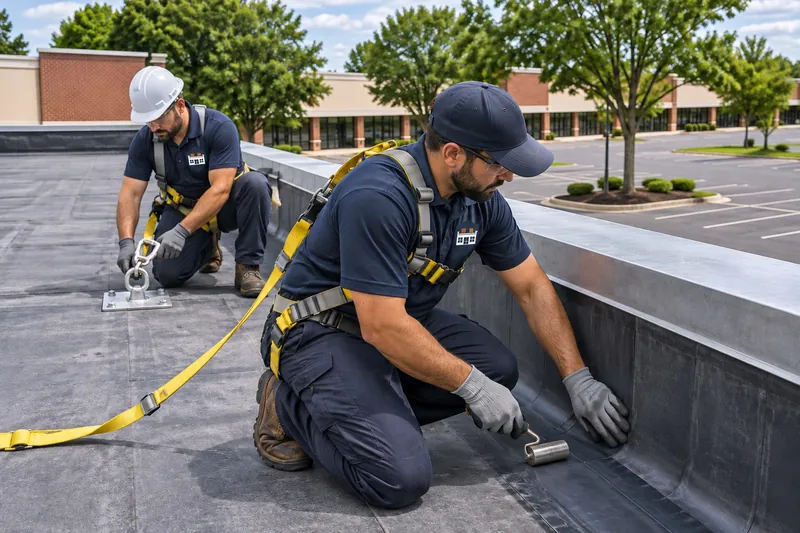
Where one roof steps down to the next, flashing patched separately by each owner leaves gaps that water finds. One continuous flashing detail tied into both roofs closes the gap for good.
Usually Means: Each owner patched only their own side
Undersized Scuppers
Small roofs drain through a single scupper or drain, and one clog backs water up against the walls.
Storefront Parapet Leaks
Front parapets and their coping open at the joints, sending water into the storefront wall.
Layers of Past Recovers
Older storefront roofs often carry two or three layers, which rules out another recover.
Small Unit Curb Leaks
Rooftop units on small storefronts sit on short curbs whose flashing cracks at the corners over time.
Why It Pays
Benefits of Shared-Wall Roof Repairs in Clifton
Fixing the joint between buildings helps both owners.
On The Roof
Wall Leaks Ended
One continuous flashing detail stops leaks that patches from each side kept missing.
Small Drains Kept Open
Clearing the one or two drains on a small storefront roof stops water from backing up against the walls.
Inside The Building
Business Uninterrupted
Small roofs are repaired or replaced quickly, with shops and restaurants staying open below.
Dining Rooms and Shops Dry
Step-down flashing rebuilt as one piece keeps water off the shared wall inside restaurants and shops along Frankfort Avenue.
For Planning And Budget
Costs Split With Neighbors
Shared-wall flashing priced on its own makes it easier to split with the owner next door.
Quick Small-Roof Projects
Small storefront roofs are repaired or replaced in a few days, which keeps planning simple.
Services Here
Commercial Roofing Services in Clifton for Small Buildings
These four services handle most Clifton roof work.
We walk your roof and look across the shared walls at the neighboring roofs, checking flashing, drains, and seams.
2
Written Scope and Price
Your scope shows the shared-wall flashing work separately, so it can be discussed with the neighboring owner if needed.
3
Schedule Around the Building
Staging on Frankfort Avenue is planned around street parking, sidewalks, and the businesses on each side of the roof. Roof hatches or ladders at the rear alley are used where possible.
4
Final Roof Walk
After work wraps up, the step-down flashing and drains are checked, and the sidewalk below is cleared.
Local Factors
What Shapes Clifton Roof Work
Frankfort Avenue's building pattern drives most Clifton roof work.
Buildings Shoulder to Shoulder
Storefronts sit wall to wall, so roof edges, drains, and flashing often meet a neighbor's roof.
Street-Front Access
Roof lifts and deliveries happen from the street or a rear alley, which shapes when and how materials go up.
Mature Street Trees
Leaves from the avenue's trees clog small scuppers and drains every fall and after storms.
Nearby
Commercial Roofing Near Clifton
Storefront roofs in these areas get the same service. For a building nearby, call us.
Indian Hills and NuLu are also in our service area, along with the rest of the Frankfort Avenue corridor between downtown and St. Matthews.
Clifton Commercial Roofing Questions
Answers for Clifton storefront, restaurant, and small office owners along Frankfort Avenue. Most questions here come back to shared walls, small drains, and storefront parapets.
Roof Condition
Do you work on restaurants along Frankfort Avenue?
Yes. We repair and replace roofs over Clifton restaurants, including the hood exhaust curbs and grease-damaged areas around kitchen fans, scheduled around service hours. Kitchen fans are shut down before crews work near them, and the grease zone around each fan is cleaned before any patch goes down.
Who fixes a leak at a wall shared with the building next door?
We can repair it from your roof. The step-down flashing is rebuilt as one detail tied into both roofs. If work on the neighbor's side is needed, the scope shows that part separately so the cost can be discussed.
Membranes and Systems
What roof works best for a small Clifton building?
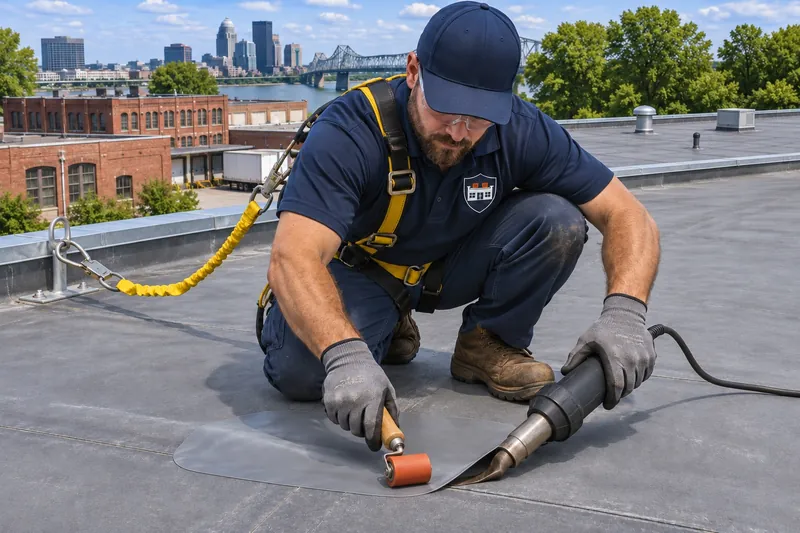
EPDM and TPO single-ply roofs are common for small low-slope storefronts, with modified bitumen as another option. The deck, drainage, and shared walls decide which one fits. Rubber roofs suit many small storefronts because a single sheet covers the roof with few seams and patches cleanly years later.
Can you replace a roof that has two old layers?
Yes. Both layers come off down to the deck, which is checked and repaired, and then new insulation and membrane go down. Louisville Metro does not allow a third roof over two existing layers.
Planning the Work
How long does a small storefront roof replacement take?
Small Clifton storefront roofs are often replaced in a few working days, depending on layers, deck repairs, and weather. Each day's work is sealed before the crew leaves. Shared-wall flashing and the rear step-down roof are usually done in the same visit, so the whole building is finished together.
Can you work on Frankfort Avenue without blocking the sidewalk?
Yes. Materials are lifted at quiet times, the sidewalk is kept open or protected, and the dumpster goes where street parking and the city allow. Rear alleys are used for lifts where they exist, and storefront entrances stay open to customers the whole time crews are on the roof.