Seal Expansion Joints Between Old Plants and Their Newer Additions
Park Hill commercial roofing for the industrial and warehouse buildings along the Park Hill rail corridor south of downtown, including the joints between additions.
Park Hill Commercial Roofing for Plants With Additions
Park Hill commercial roofing follows the rail corridor. Additions and joints are the theme.
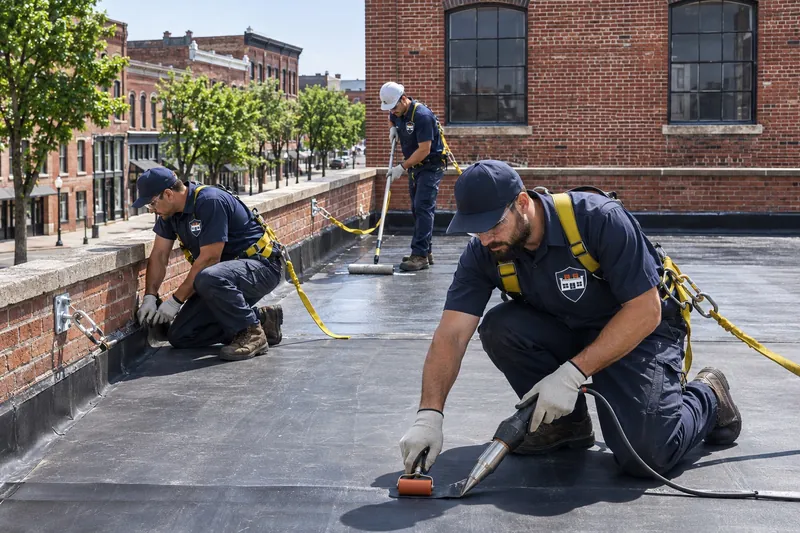
Park Hill sits south of downtown Louisville along a rail corridor lined with industrial and warehouse buildings. Many of those buildings grew over decades, with a newer warehouse or plant bay added to an older masonry or steel structure.
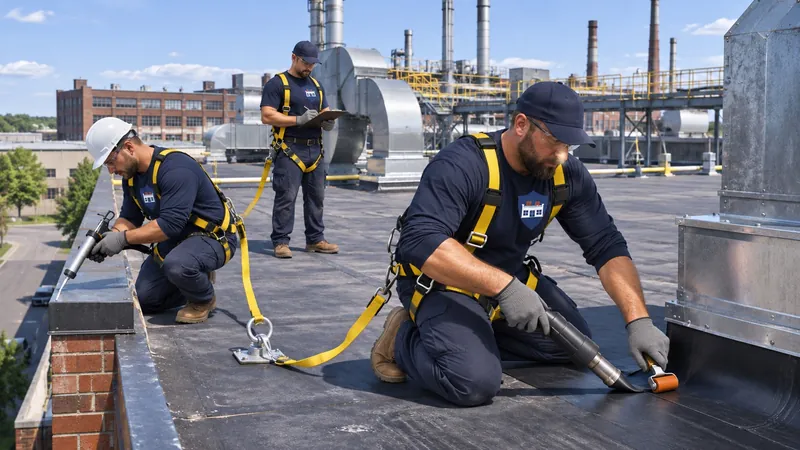
Every addition creates an expansion joint where the two structures meet and move independently. On Park Hill roofs, those joints, and the flashing where a low addition meets a taller wall, are where we trace most leaks.
Expansion joints between structures
Older plants with newer bays
Low roofs against taller walls
Rail and truck access
Each section of a Park Hill building can have a different age, deck, and roof system. We rate them separately so the oldest section is not holding the newer ones hostage.
Common Problems
Roof Problems on Park Hill Industrial Buildings
These four problems appear on most Park Hill roofs.
Joints
Failed Expansion Joint Covers
Joint covers dry out and split as the two structures move, letting water straight into the gap between them. A new joint cover along the full length lets both structures move freely.
Usually Means: The joint cover has dried out and split
Pulled Wall Flashing
Where a low addition meets a taller wall, base flashing pulls loose as the structures move differently.
Water Trapped at Joints
Raised joints act as dams, holding water on one side until it finds a seam or flashing gap.
Worn Original Roofs
Original roofs on the oldest part of the building often fail first while newer bays stay dry.
Leaks at Fan and Unit Curbs
Plant fans and units vibrate their curb flashing loose, especially on older roof sections.
Why It Pays
Benefits of Section-by-Section Roofing in Park Hill
Multi-section industrial buildings repay a roof plan that treats each part separately.
On The Roof
Joints That Move Freely
Proper joint covers let each structure move without tearing the roof.
Older Sections Restored
Replacing the oldest roof section with new insulation and membrane brings it in line with the newer bays.
Inside The Building
Production Protected
Fixing joint leaks keeps water off equipment and stock along the seam between buildings.
Joint Leaks Stopped Indoors
New joint covers keep water off the floor along the seam between old and new buildings.
For Planning And Budget
Worst Sections First
Section ratings let owners replace the oldest roof now and keep repairing the newer bays.
Phased by Section
Replacing one roof section at a time spreads the cost across several budget years.
Services Here
Commercial Roofing Services in Park Hill for Industrial Buildings
These four services handle most Park Hill roof work.
Four steps, with every joint and section on the roof plan.
1
Inspect Your Roof
Each roof section, joint, and wall tie-in is walked and marked on a roof sketch, with cores in any section that has leaked.
2
Written Scope and Price
The written scope treats each section and joint separately, so the worst ones can be fixed first.
3
Schedule Around the Building
Rail and truck access, shift times, and equipment shutdowns set the work days with your plant contact. Joint covers are opened only on days the crew can close them again.
4
Final Roof Walk
On the final walk we check every joint cover and wall flashing and clear the roof of debris.
Local Factors
What Shapes Park Hill Roof Work
Park Hill's industrial corridor sets a few patterns for roof work.
Buildings Grown in Stages
Plants and warehouses expanded over decades, leaving several roof sections and joints on one building.
Rail and Truck Traffic
Tracks and loading areas limit where cranes and dumpsters can sit during roof work.
Mixed Structures
Masonry, steel, and newer framing meet under one roof, each moving in its own way.
Nearby
Commercial Roofing Near Park Hill
Plants and warehouses in these areas are covered too. For a site not shown, call us.
Algonquin and Shelby Park are close by and in our service area too, along with other industrial buildings along the rail corridors south of downtown.
Park Hill Commercial Roofing Questions
Answers for Park Hill industrial and warehouse owners. Most questions here involve expansion joints, wall tie-ins, and roofs built in sections.
Roof Condition
What is an expansion joint on a roof?
It is the gap where two structures meet, such as an old plant and a newer addition. A joint cover bridges the gap and flexes as the structures move. When the cover fails, water drops straight into the building.
Can one roof section be replaced and the others repaired?
Yes. On Park Hill buildings with several sections, we often replace the oldest roof and repair the rest, with new joint details where the sections meet. Each section gets its own rating in the report, so the oldest roof can be replaced first while the newer bays stay on repairs.
Membranes and Systems
Why does the leak move around along the joint?
Water entering a failed joint cover runs along the gap before dropping inside, so drips show up at different spots. Replacing the cover along its full length fixes it.
Can you add crickets at expansion joints?
Yes. Crickets built against raised joints split the water flow toward drains on each side, so water no longer pools against the joint cover. Crickets are built with tapered insulation under the membrane, so they stay in place and keep water moving toward the drains.
Planning the Work
Do you work on industrial roofs while the plant runs?
Yes. Work is planned with your plant contact around shifts and equipment, and areas over active processes are scheduled for shutdowns or protected. Hot work near process exhaust is scheduled with your safety lead, and areas over sensitive equipment are covered or worked during downtime.
Do you work with plant safety rules?
Yes. Crews complete site orientation and follow your rules for access, lockout, hot work, and protective equipment, along with fall protection near roof edges. Crews also follow your rules for badging, escorts, and staging areas so deliveries and crane lifts stay clear of plant traffic.
Plan Park Hill Commercial Roofing Section by Section
Send the address and where the building's sections meet. We walk each one, check every joint, and price the work in writing. A roof sketch marking every section and joint comes with the estimate.