Standard Roof Details
- Membrane
- Standard single-ply
- Curbs
- Basic flashing
- Traffic
- Occasional service visits
- Piping
- Few roof penetrations
- Scheduling
- Business hours
Commercial Roofing Service
Louisville industrial roofing covers plant and processing roofs with exhaust fans, piping, catwalks, and heavy equipment, scheduled around shifts and site safety rules.
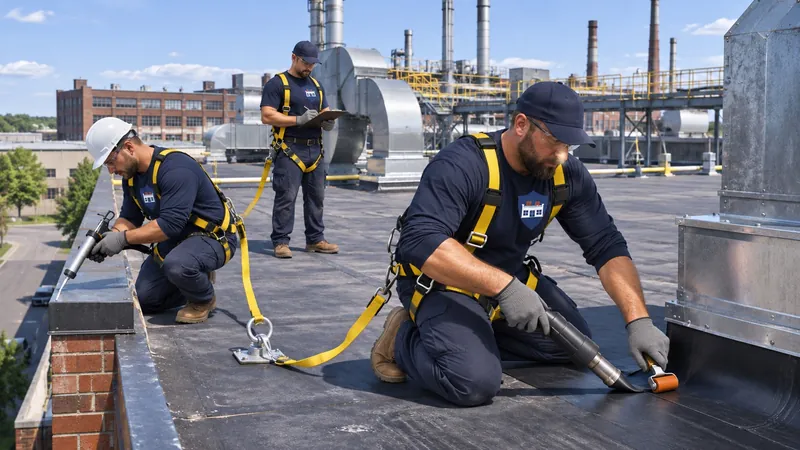
Industrial Fit
Louisville industrial roofing needs details built for equipment and traffic. Here is how they differ from a standard roof.
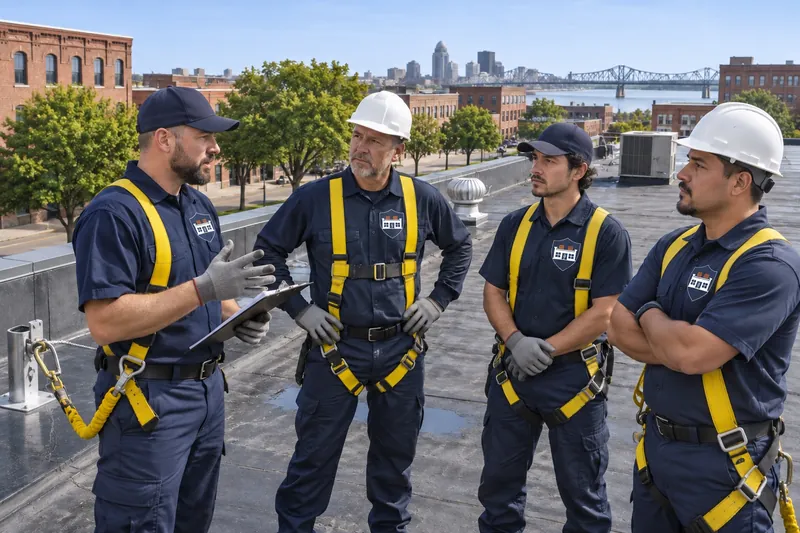
Industrial Problems
Louisville plant roofs see more equipment, more traffic, and more exposure than ordinary commercial roofs. These problems follow.
Vibration from exhaust fans and units works flashing loose at the curb. Curbs are reflashed with details that allow movement. Curb details on fan bases are built to flex with the vibration instead of fighting it.
Usually Means: Curb flashing was not built for vibration
Oils and residues from process exhaust break down some membranes.
Daily trips to fans and units wear paths into the roof.
Pipe supports and curbs block water flow to drains.
Heavy units and vibration crush insulation and stress the deck beneath.
Industrial Options
Industrial roofs need materials and details matched to what comes out of the building and what sits on top of it.
| Option | Where It Fits | Why |
|---|---|---|
| Chemical-Resistant Membrane | Roofs near process exhaust | Resists the oils and residues that break down standard membranes |
| Reinforced Single-Ply | Large plant roofs with heavy traffic | Thicker sheets with stronger reinforcement |
| Modified Bitumen | Equipment-heavy roof areas | Multi-ply surface around frequent service work |
| Walk Pads and Pavers | Paths to fans, units, and access hatches | Protects the membrane from boots and tools |
| Raised Pipe Supports | Process and gas piping runs | Keeps piping off the membrane and drains clear |
Why It Matters
A roof built for industrial use protects production as much as it protects the building.
Flashing details designed for vibration and heat hold up longer around fans and units.
Raising pipe supports and adding crickets keeps water moving to the drains on equipment-heavy roofs.
Watertight roofs over lines, panels, and stock keep leaks from stopping work below.
Dry floors under fan curbs and piping runs mean fewer slip hazards and fewer wet electrical panels on the plant floor.
Defined walk paths and clear routes to equipment reduce slips and roof damage during service.
Scheduling roof work with your shutdown windows avoids surprise downtime.
Call with the area and what runs below it. We will set the first visit around your shift schedule and safety rules.
Industrial Process
Industrial jobs add one more step to the usual order: planning around the plant before anyone climbs the ladder.
We walk the roof with your maintenance lead, record every penetration and exposure, and core suspect areas.
Site safety orientation, lockouts, hot-work permits for roof welding, and shutdown windows are set with your team.
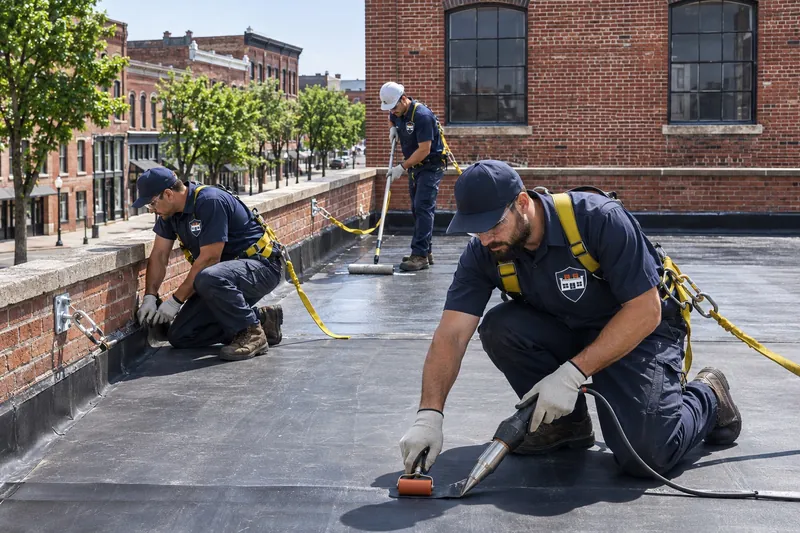
Membrane and insulation go up on planned crane lifts, and roof work moves area by area around running equipment.
Penetrations are flashed, walk pads set, debris removed, and the roof is walked with your team.
After the job, curbs, pipe supports, and walk pads go on a maintenance schedule matched to plant traffic.
About Industrial Roofs
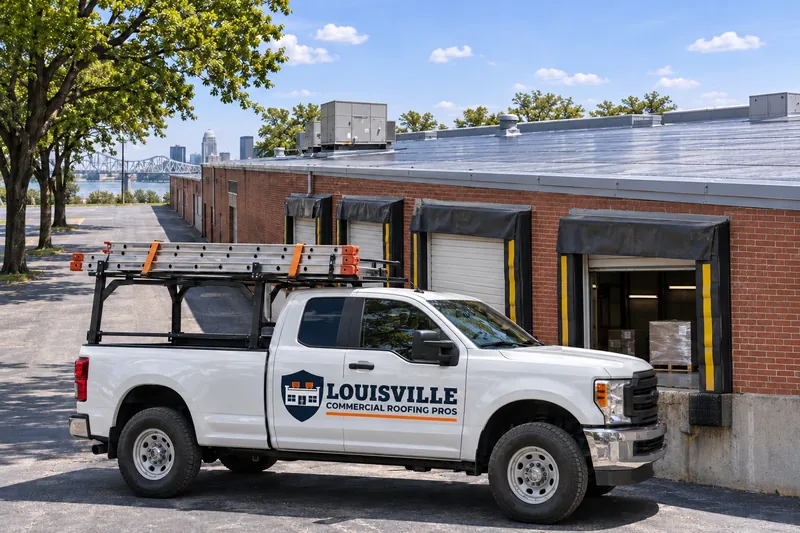
Industrial roofs in Louisville sit over manufacturing plants, processing buildings, and large distribution operations. They carry exhaust fans, makeup air units, process piping, catwalks, and access hatches, and maintenance crews walk them every week.
Every one of those items is a hole in the roof or a load on it. We plan the membrane, the flashing details, and the walk paths around that equipment, and we schedule the work with the people who run the plant.
Related Services
Plant roofs usually need these services alongside industrial roofing work.
Scheduled visits for curbs, drains, and walk paths on busy plant roofs.
DetailsFull tear-off and new roof when wet insulation spreads under the equipment.
DetailsHow industrial roofs differ, and how roof work fits around a running plant. Call with your plant's shutdown calendar and we will plan the roof around it.
Roof Condition
On a Louisville plant, the roof carries more equipment, penetrations, and foot traffic than an ordinary commercial roof, and it may face heat or chemical exhaust. Those conditions decide the membrane and the details, and the work schedule follows plant operations, shift changes, and site safety rules.
It depends on what comes out of the stacks. Oils, grease, and some chemical residues soften standard membranes, so areas near those exhausts get a membrane rated for that exposure. We look at the exhaust sources during the roof walk before recommending one.
Membranes and Systems
Process piping is lifted onto raised supports so the membrane underneath can be replaced and the drains stay clear. Pipe penetrations get boots or curbs built for heat and movement.
Yes, in most cases. Work is planned area by area, away from active exhaust and with lockouts where needed. Noisy or hot work is scheduled with your team, and anything that needs a shutdown gets planned into your shutdown windows.
Planning the Work
Yes. Crews complete your site orientation and follow your rules for access, hot work, lockout, and protective equipment, on top of fall protection near roof edges.
We follow your access rules: badging, escorts, sign-in, and the routes you assign for crews and materials. Crane lifts and deliveries are scheduled with your team so they stay clear of shipping lanes, forklifts, and shift changes at the gate.
Next Step
Send the plant address and the area of concern. We will set up a roof walk with your maintenance team and price the work in writing. If a leak is active over equipment, say so on the call, and that area gets looked at first.
Roof Leaking or Wearing Out? Have Us Call You
Leave a name and number to talk about your roof.
Thank You. Your Request Is In.
We have your name and number and will call you about the roof. To talk now, call (502) 293-5786.
Or call (502) 293-5786