Commercial Roof Repair
- Where Water Enters
- One seam, curb, or drain
- Insulation
- Dry around the leak
- Membrane
- Still bends cleanly
- Building Impact
- Hours on the roof
- Best Next Step
- Repair and recheck
Commercial Roofing Service
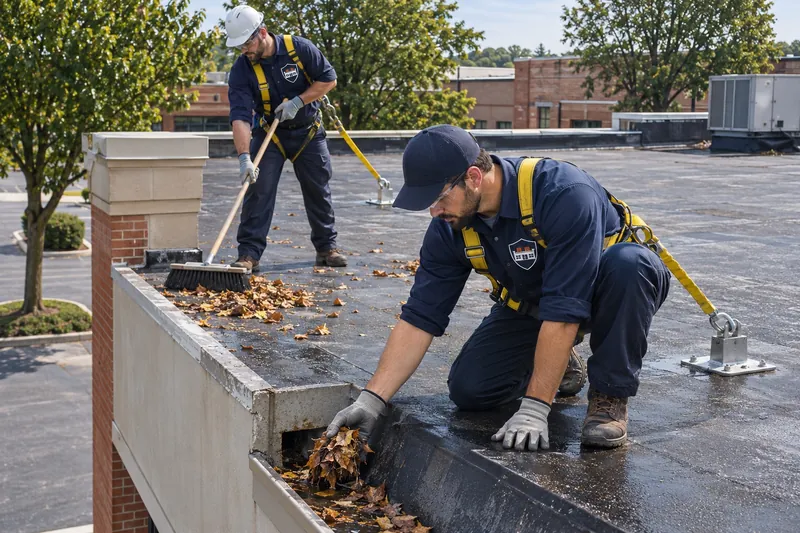
Louisville commercial roof repair starts on the roof: we trace each leak to its seam, curb, drain, or flashing, then close it.
Repair Fit
Louisville commercial roof repair holds when the damage is local. These five rows show where repair ends and replacement begins.
What We Repair
Most commercial roof leaks in Louisville come from a short list of details. These are the repairs we make most often.
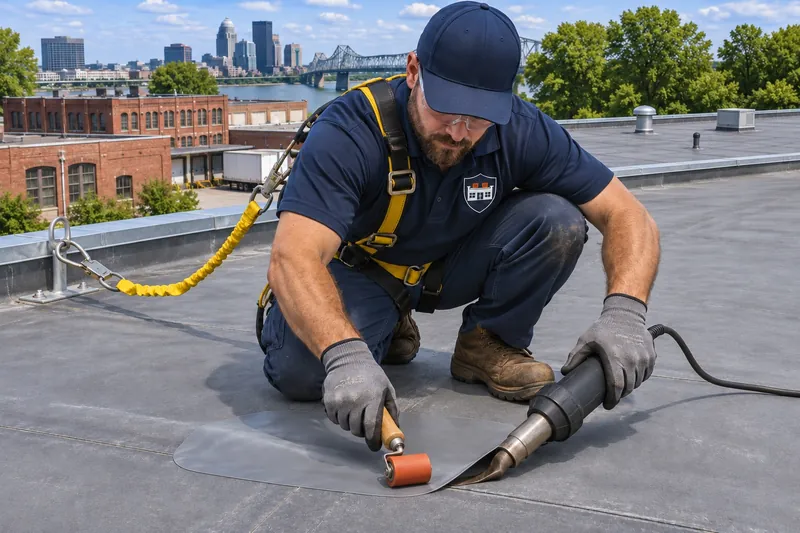
Seams take the most stress from heat, cold, and building movement. A probe finds the open lengths, which are rewelded or re-taped. Short open lengths are reworked the same visit they are found, before water spreads into the insulation.
Usually Means: The seam was welded cold or never primed
Flashing peels where the roof meets a wall or parapet, letting water run behind it.
Unit curbs, pipe boots, and pitch pans dry out and crack at the seal.
Service techs, dropped tools, and hail leave holes in single-ply roofs.
Debris in strainers backs water up until it reaches seams and flashing.
Repair Options
Each repair matches the roof system already in place. Mixing materials that do not bond is a common reason a patched area leaks again.
| Repair | Used On | What It Fixes |
|---|---|---|
| Heat-Welded Patch | TPO and PVC membranes | Split seams, punctures, and tears in the field |
| Primed Tape and Cover Strip | EPDM rubber roofs | Lifted seams and small holes in the rubber |
| Flashing Rebuild | All low-slope systems | Base flashing pulled from parapets, curbs, and walls |
| Drain and Scupper Reset | Flat and built-up roofs | Clogged or loose drains and leaking scupper boxes |
| Fastener and Lap Reseal | Metal panel roofs | Backed-out screws, dry washers, and open laps |
Why Repair Now
A prompt, well-matched repair protects more than the ceiling tile below the leak.
Leaks left open rust the deck from the top down. Early repairs keep corrosion from spreading under the membrane.
Rebuilt base flashing at walls and curbs stops water from running behind it and down the inside of the parapet.
Closing the entry point quickly keeps water from soaking the boards around it, so fewer of them need replacing.
Most repairs happen from the roof surface while offices, stores, and warehouses below stay open.
Targeted repairs on an otherwise healthy roof let you get the full service life out of it before planning a new one.
Photos of each repair and the detail it fixed give you a record to compare against the next inspection.
Call with where the water lands inside and what sits on the roof above. We make the area watertight first and plan the permanent repair around the weather.
Repair Process
Repairs follow a short order of work so the leak gets found, closed, and checked in one visit when the weather allows.
We start above the stain inside, then follow the water path across the roof to the seam, curb, or flashing where it enters.
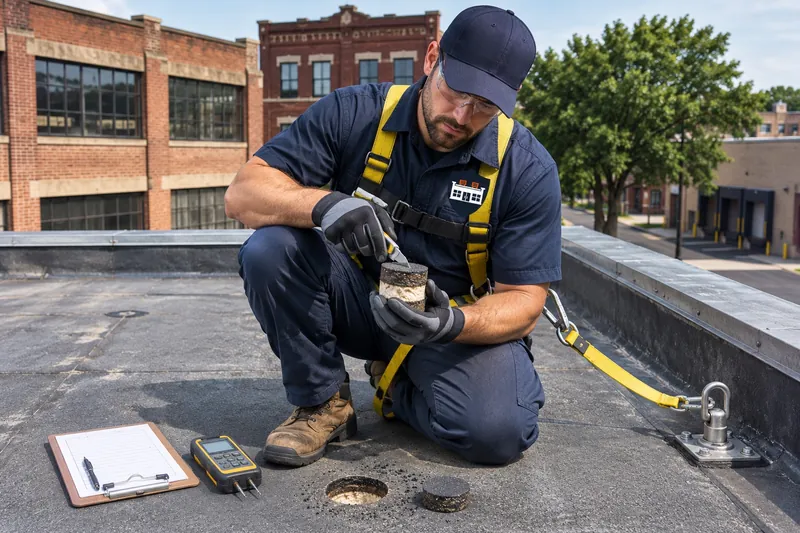
Moisture readings and a small core show whether the boards under the leak are wet and how far the water has spread.
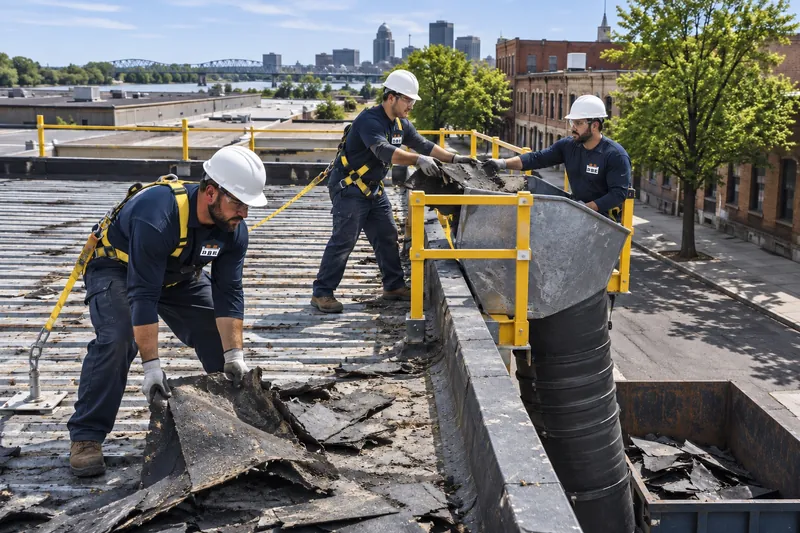
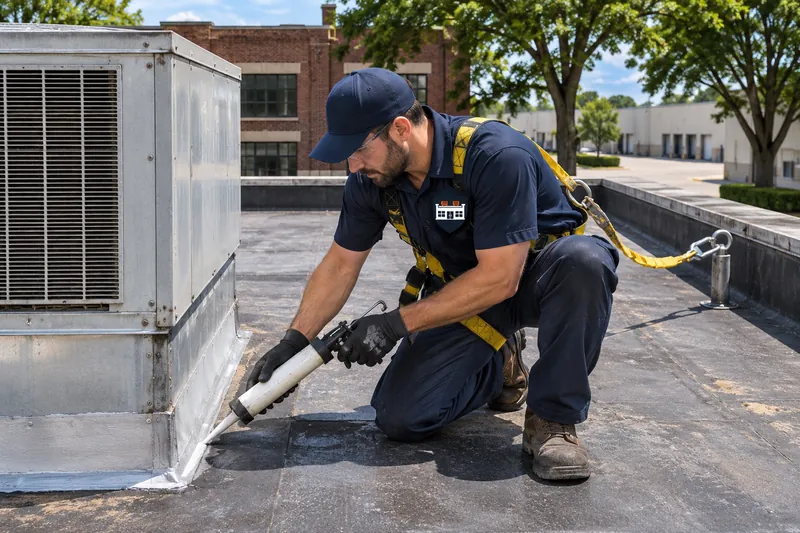
The failed detail is cleaned, primed, and closed with matching membrane, tape, or flashing, and wet boards are swapped out.
New seams are probed, and you get photos of the before and after with any other weak spots we noticed.
Leak Tracing
A stain on a ceiling tile shows where water lands, which can be ten or twenty feet from where it gets in. On a Louisville warehouse or office, the water usually enters at a seam, a curb, a drain, or a wall flashing, then runs along the deck before it drips.
We follow that path on the roof, confirm it with moisture readings, and open a small core if the insulation looks wet. The repair goes where the water enters, and the wet boards around it get replaced.
Related Services
Repairs often lead to one of these next steps once the roof has been walked.
Find every weak seam and wet area before the next leak shows up inside the building.
DetailsKeep drains clear and curbs sealed with spring and fall visits after the repair is done.
DetailsPlan a tear-off when core samples show wet insulation across much of the roof.
DetailsAnswers about leaks, repair timing, and what changes the price of a repair.
Roof Condition
Look at how far the problem spreads. If leaks trace to a few seams or curbs and core samples nearby come up dry, a repair fixes it. If wet insulation shows up across large areas, or the membrane is cracking everywhere, replacement is the better spend.
Details cause most of them: open seams, flashing pulling away at parapets and rooftop units, clogged drains, and punctures from service traffic. Older brick buildings near downtown Louisville add worn counterflashing in the masonry, which lets water in behind the base flashing.
Membranes and Systems
Yes. Most of the roofs we repair around Louisville were installed by someone else. We identify the membrane or metal system first, then use materials and methods that bond to it, so the repair holds alongside the original roof.
Most seam repairs on TPO and EPDM roofs are finished in a single visit once the leak is traced, as long as the surface is dry. Larger wet areas take longer because the soaked insulation is cut out and replaced first.
Planning the Work
Four things drive it: how big the damaged area is, what caused it, whether insulation underneath is wet, and how hard the spot is to reach. A single seam weld is a short visit; replacing a wet section of insulation and membrane takes materials and more labor.
Yes, in most cases. A dry surface and cold-rated adhesives or welding equipment allow many single-ply repairs in winter. When a permanent repair needs warmer weather, we seal the area watertight first and return on the next suitable dry day.
Next Step
Send the property address and where the water shows up. We walk the roof, find the source, and price the repair in writing.
Roof Leaking or Wearing Out? Have Us Call You
Leave a name and number to talk about your roof.
Thank You. Your Request Is In.
We have your name and number and will call you about the roof. To talk now, call (502) 293-5786.
Or call (502) 293-5786