Restore Rail-Side Industrial Roofs Without a Full Tear-Off Where Possible
California commercial roofing for rail-side industrial buildings, older commercial blocks, and churches in the California neighborhood west of Old Louisville.
California Commercial Roofing for Rail-Side Industrial Buildings
California commercial roofing covers rail-side industry and churches. Layer counts come first.
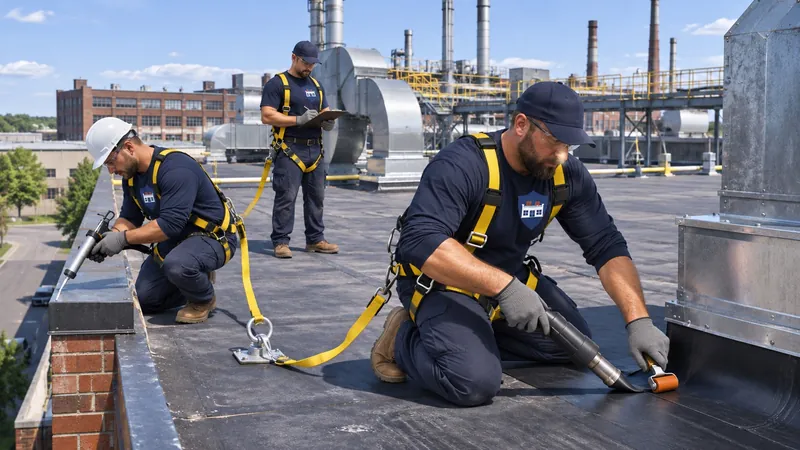
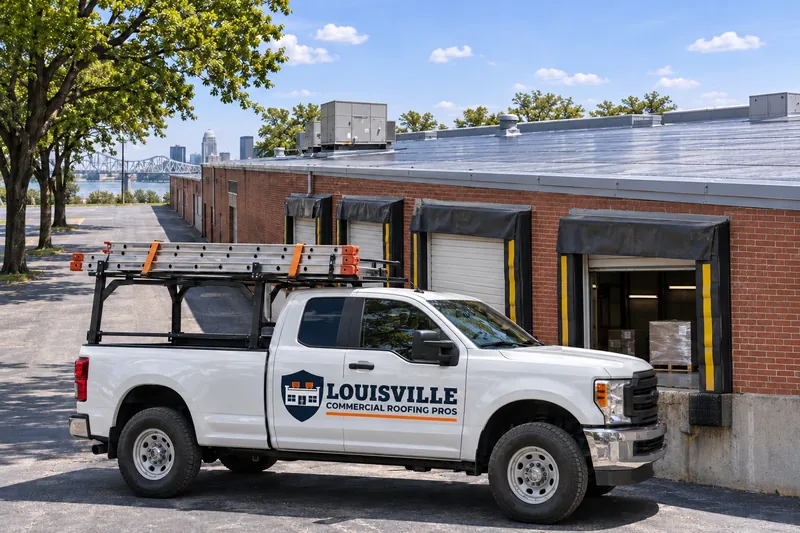
The California neighborhood lies west of Old Louisville and south of Broadway, with rail lines running along its edges. Its commercial roofs cover small industrial buildings, warehouses, older commercial blocks, and churches, many of them built in stages over the last century.
Industrial buildings next to the rail corridor collect soot, dust, and grit on their roofs, which ends up in drains and gutters. Many also carry a recover or two from past decades, so the first question on a California roof is how many layers are already there.
Small industrial and warehouse buildings
Grit and debris in drains
Past recovers on the deck
Churches and commercial blocks
Many California neighborhood buildings mix uses, with shops, small manufacturers, and storage under one roof. We plan the roof work around whoever is working below each section.
Common Problems
Roof Problems on California Neighborhood Buildings
Four problems come up on most California roofs.
Drainage
Grit-Choked Drains
Dust and soot from nearby rail lines wash into drains and gutters, slowing runoff until water ponds. Strainers on each drain catch the grit before it reaches the leader.
Usually Means: Drains need strainers and regular clearing
Water Between Layers
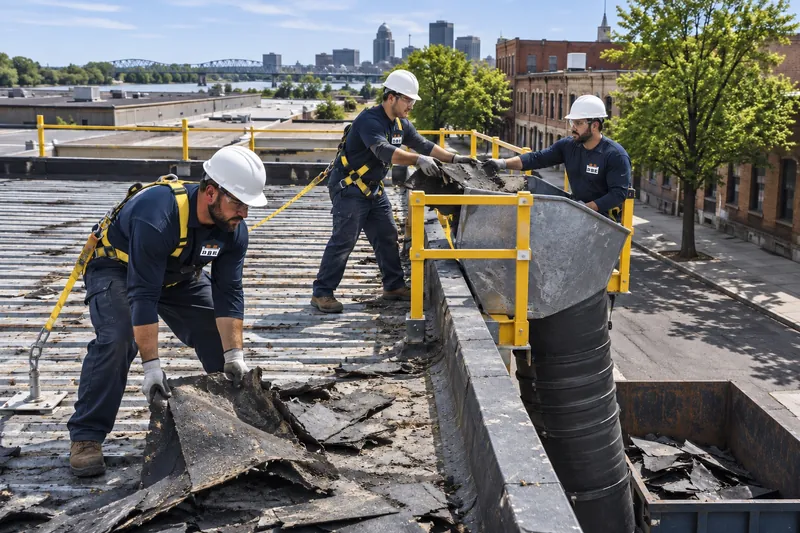
Past recovers trap moisture between the old and new roofs, hiding wet insulation from view.
Rusted Deck and Panels
Long-term leaks rust steel decks and metal panels, especially at low spots and panel ends.
Old Curbs and Vents
Abandoned vents and curbs from past equipment are often poorly capped and leak in heavy rain.
Loose Edge Metal and Gravel Stop
Older edge metal and gravel stop loosen in wind, letting water under the roof edge.
Why It Pays
Benefits of Planned Roof Work for California Owners
Older industrial buildings get the most from a roof plan built on the facts.
On The Roof
Drains That Stay Open
Strainers and scheduled cleaning keep grit from blocking the drains again.
Deck Repaired While Open
Rusted deck sections replaced during tear-off give the new roof a sound base.
Inside The Building
Operations Kept Dry
Fixing leaks over work areas protects equipment and stock inside the building.
Work Areas Protected
Leaks closed over work areas keep equipment and stock dry in small plants and shops.
For Planning And Budget
Options Matched to Layers
Knowing the layer count up front shows which roof options are allowed before any money is spent.
Drain Schedule Set
A spring and fall drain schedule keeps rail-side grit from building up again.
Services Here
Commercial Roofing Services in California for Older Industrial Stock
These four services handle most roofs in the California neighborhood.
Four steps, starting with a count of what is already on the deck.
1
Inspect Your Roof
Layer count comes first: we core the roof, check moisture, walk the drains and flashing, and look at the deck from inside.
2
Written Scope and Price
The roof scope explains which options the layer count allows, with photos and a price for each one.
3
Schedule Around the Building
Rail-side lots and loading areas decide where the crane and dumpster go, planned around your operations. Roof drains near the work area get strainers so debris stays out of them.
4
Final Roof Walk
Our crew flushes every drain, checks the flashing, and walks the finished roof with you before closing out.
Local Factors
What Shapes California Roof Work
The neighborhood's history shows up on its roofs.
Rail Corridor Neighbors
Buildings along the tracks gather grit on their roofs and need drains cleared more often than most.
Small Industrial Users
Shops and small plants keep working during roof jobs, so schedules follow their operations.
Roofs Built Up Over Time
Decades of recovers leave several layers on many decks, which limits the options for a new roof.
Nearby
Commercial Roofing Near California
We serve industrial and church roofs in these areas as well. Somewhere close by? send us a message.
Algonquin, Russell, and Shawnee are close by and in our service area too, with the same roof walk and written estimate for their older buildings.
California Commercial Roofing Questions
Answers for California neighborhood industrial, commercial, and church owners. Most questions here involve layer counts, clogged drains, and older industrial roofs.
Roof Condition
Can a new roof go over our old one?
Only if there is a single existing layer and cores show it is dry. Louisville Metro does not allow a recover over two or more existing layers, and wet layers always come off first.
Why do our drains clog so often?
Buildings near the rail corridor collect dust, soot, and grit that wash into drains and gutters. Strainers and spring and fall cleaning keep them open. Grit packs into strainers and leaders faster near the tracks, so drains here need clearing more often than drains elsewhere in town.
Membranes and Systems
Do you work on small industrial buildings?
Yes. We repair and replace roofs on small plants, shops, and warehouses in the California neighborhood, working around the equipment and operations inside. Exhaust fans, small process vents, and the curbs around them get flashing built for heat and vibration on these roofs.
How do you check the deck on an older building?
From inside, we look for stains, rust, or sagging under the roof. On top, soft spots and wet cores tell the same story. Damaged deck areas are priced separately and replaced during tear-off.
Planning the Work
How long does a small industrial roof replacement take?
It depends on roof size, layers, deck repairs, and weather. Small buildings often take a few working days, and each section is sealed before the crew leaves so work inside can continue.
Do you replace metal roofs on warehouses near the rail lines?
Yes. We repair fasteners, laps, and rusted panels on metal warehouse roofs in the California neighborhood, and install new metal roofs where the old panels are past saving. Rust at panel ends and laps tends to be heavier near the rail corridor, so panel ends are checked closely on every visit.