Tighten Exposed Fasteners and Rusted Laps on Shop and Light Industrial Roofs
Newburg commercial roofing for light industrial buildings, metal shops, and churches in southeast Louisville, from fastener repairs to new metal and flat roofs.
Newburg Commercial Roofing for Metal Shops and Light Industrial
Newburg commercial roofing is mostly steel buildings. Exposed fasteners need regular attention.
Newburg lies in southeast Louisville, near Newburg Road and the I-264 corridor, with a mix of light industrial buildings, shops, small warehouses, and churches. A large share of its commercial roofs are exposed-fastener metal panels on steel buildings.
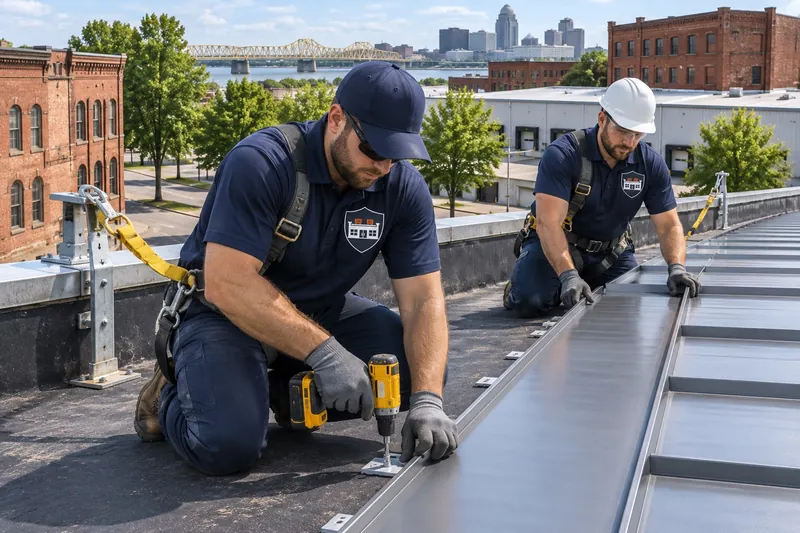
Exposed-fastener roofs are only as tight as their screws. Heat and cold move the panels, fasteners back out, washers crack, and laps open. Our Newburg work centers on fastener lines and laps, with panel replacement where rust has gone through.
Exposed-fastener metal panels
Steel shop and warehouse buildings
Rust at laps and panel ends
Churches with flat roof sections
Newer standing-seam roofs with concealed clips need less fastener work, but most older Newburg shop buildings use exposed fasteners that need attention every few years.
Common Problems
Roof Problems on Newburg Commercial Buildings
These four problems show up on most Newburg metal roofs.
Fasteners
Backed-Out Screws
Panel movement loosens screws over the years until their washers no longer seal against the panel. Replacing fasteners in batches with larger screws keeps the panels tight.
Usually Means: Fastener washers have cracked with age
Dried Lap Sealant
Sealant in side and end laps dries and shrinks, letting wind-driven rain wick between panels.
Rust at Cut Edges
Cut edges and panel ends rust first, along with spots where metal shavings were left on the roof.
Overflowing Eave Gutters
Gutters full of debris back water up under eave trim and into the wall.
Hail Dents and Cracked Paint
Hail dents panels and cracks their finish, starting rust spots that spread over time.
Why It Pays
Benefits of Metal Roof Upkeep for Newburg Owners
Exposed-fastener roofs reward regular attention.
On The Roof
Panels Kept in Service
Tight fasteners and laps keep good panels working for many more years.
Rust Stopped Early
Sealing cut edges and replacing rusted spots keeps rust from spreading across good panels.
Inside The Building
Shops Stay Dry
Fixing lap and fastener leaks protects tools, stock, and work areas inside.
Church Halls Dry
Flat roof repairs over halls and offices keep church spaces in use during wet weeks.
For Planning And Budget
Small Repairs, Small Bills
Fastener batches and lap reseals cost far less than the panel damage they prevent.
Fastener Checks Scheduled
A fastener check every year or two keeps exposed-fastener roofs tight between repairs.
Services Here
Commercial Roofing Services in Newburg for Steel Buildings
Fastener lines, laps, panel ends, and trim are walked panel by panel, and the purlins are checked from inside where possible.
2
Written Scope and Price
The scope lists fastener, lap, and panel work by roof area, with photos and a price for repair or new panels.
3
Schedule Around the Building
Shop hours and roll-up door traffic set the work plan, with panels and screws staged clear of doorways. Metal panels are lifted in bundles and set on the roof over purlins, never mid-span.
4
Final Roof Walk
Metal shavings are swept off, every new screw is checked, and gutters are cleared before the last walk.
Local Factors
What Shapes Newburg Roof Work
Steel buildings set the tone for Newburg roof work.
Steel Building Stock
Shops and light industrial buildings with metal roofs make fastener and lap work the most common job.
Roll-Up Doors and Bays
Work bays and doors below set where roof materials can be staged and when crews can work overhead.
Churches Among the Shops
Churches with flat and metal roof sections round out the local building mix.
Nearby
Commercial Roofing Near Newburg
Shops and steel buildings in these areas are covered too. Building elsewhere? send us a message.
Beechmont and Indian Hills are in our service area too, along with light industrial buildings along the I-264 corridor.
Newburg Commercial Roofing Questions
Answers for Newburg shop, light industrial, and church owners. Most questions here involve exposed fasteners, panel laps, and rust on steel buildings.
Roof Condition
Why does my metal roof leak at the screws?
Exposed fasteners loosen as panels expand and contract, and their rubber washers crack with age. Water then runs down the screw shank. Replacing them with larger screws and new washers stops it.
Can rusted metal panels be replaced one at a time?
Yes. Rusted-through panels are cut out and replaced with matching profile panels, fastened and sealed at the laps. If many panels need replacing, a new roof is often the better value.
Membranes and Systems
Can a new metal roof go over the old one?
On some steel buildings, new panels can be installed over the existing roof on spacers or new purlins. The structure, the old panels, and drainage decide whether it works. If the old panels are rusted through or the purlins are weak, the old roof comes off before new panels go on.
Can translucent light panels be replaced?
Yes. Cracked or yellowed light panels are replaced with new ones in the same profile, with sealant and fasteners at every lap. Older light panels turn brittle and crack under foot traffic, so they are marked on the roof and kept off walking routes.
Planning the Work
Do you install standing-seam roofs on shop buildings?
Yes. Standing-seam panels with concealed clips replace older exposed-fastener roofs on Newburg shops and light industrial buildings, removing most of the screws that used to leak. The new panels run from ridge to eave in one length where possible, which removes the end laps that leak on older roofs.
What causes rust spots on a newer metal roof?
Metal shavings left on the panels after drilling are the most common cause. They rust within weeks and stain or pit the finish. Sweeping the roof clean after every job prevents it.
Get Newburg Commercial Roofing Priced Panel by Panel
Send the address and where drips show up. We walk every panel, check every fastener line, and price repairs or new panels in writing. If the roof has light panels or gutters giving trouble too, mention them and we will price those along with the metal work.