
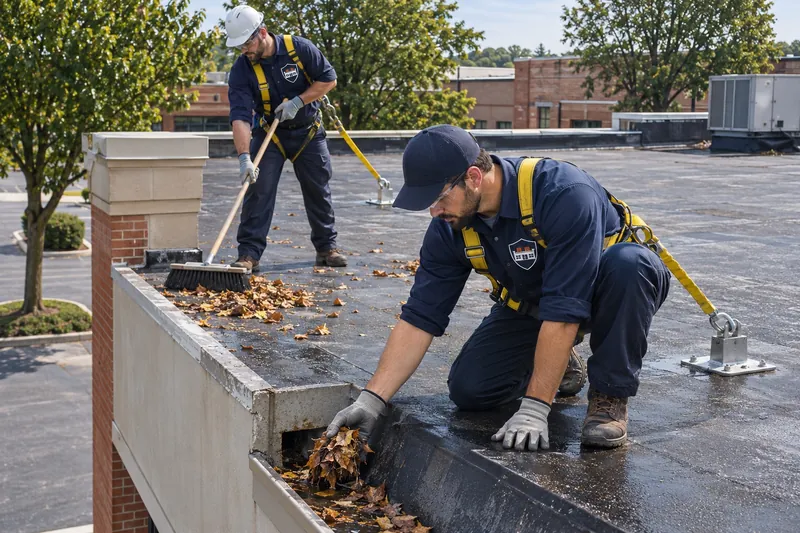
Drainage Repair
- Ponding
- A few low spots
- Drains
- Cleared and reset
- Insulation
- Dry near the ponds
- Slope Fix
- Crickets at problem spots
- Roof Surface
- Existing plies or membrane
Commercial Roofing Service
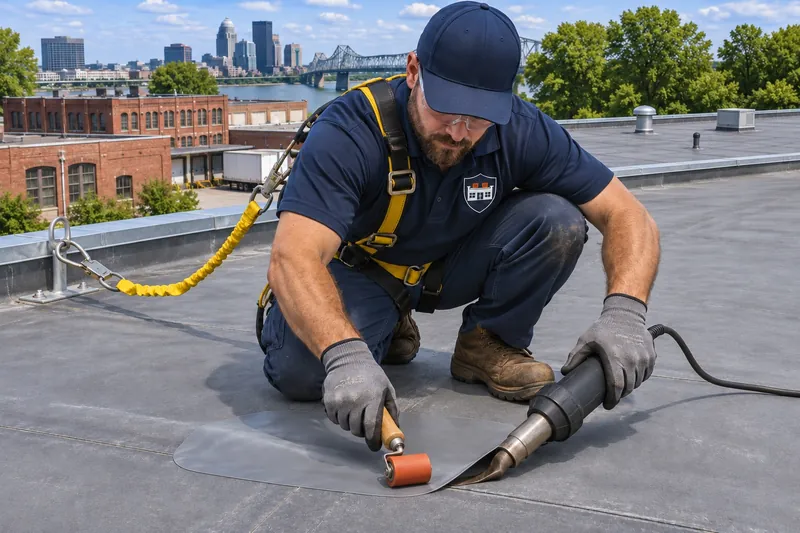
Louisville flat roofing work covers built-up, modified bitumen, and single-ply roofs, with drainage fixes for ponding water and new flat roofs when needed.
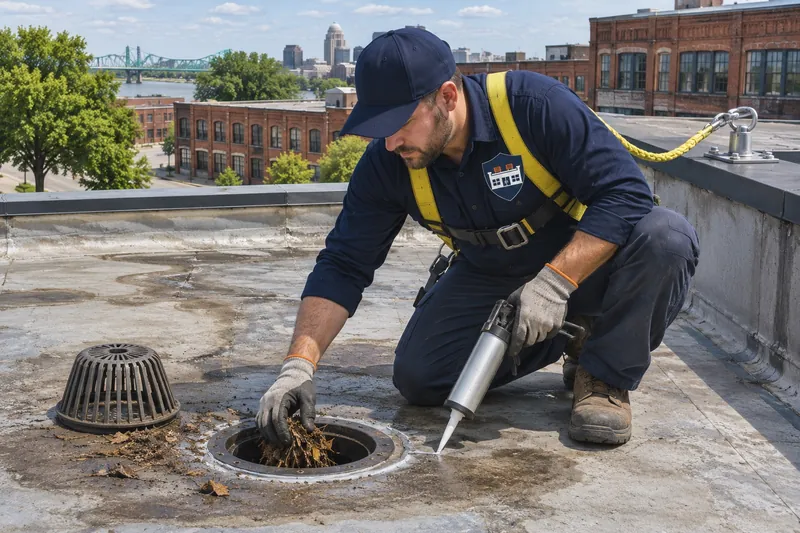
Flat Roof Fit
Louisville flat roofing problems are mostly drainage problems. The question is how far the water has spread.
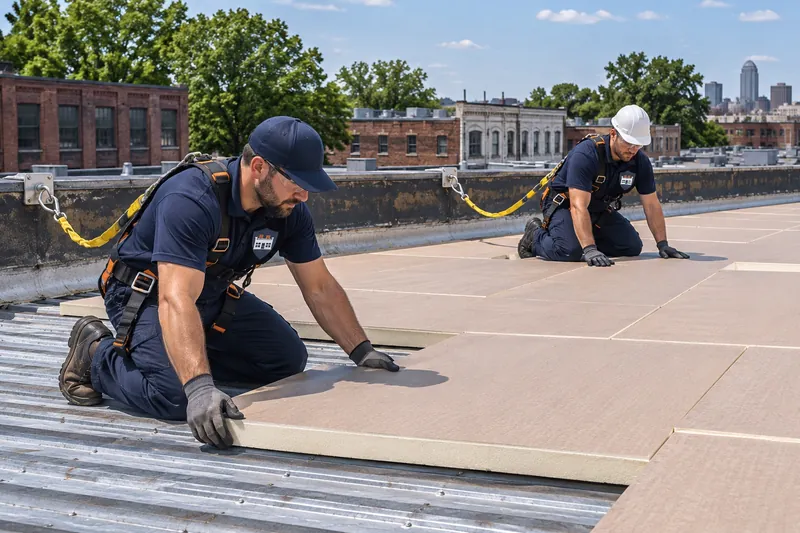
Flat Roof Problems
These four problems account for most of the flat roof calls we get in Louisville.
Low spots, sagging deck, and drains set above the roof surface leave water sitting for days and wearing the membrane. Dirt rings around low spots mark exactly where the water sits and for how long.
Usually Means: Drains are high, clogged, or the deck has sagged
Leaves, gravel, and debris from other trades block drains.
Moisture trapped between plies swells into blisters, and old plies split as the building moves.
Edge metal that lifts in wind pulls the membrane with it.
Rooftop units block the flow toward drains and hold water on their upslope side.
Flat Roof Options
Flat roofs in Louisville come in several systems. These are the ones we repair, recover, and install.
| System or Fix | What It Is | Good For |
|---|---|---|
| Built-Up Roof (BUR) | Layers of felt and asphalt with a surface coat or gravel | Older commercial and institutional buildings |
| Modified Bitumen | Rolled asphalt sheets, torch, cold, or self-adhered | Roofs with foot traffic and equipment |
| Single-Ply (TPO or EPDM) | One-ply membrane, welded or taped seams | Most new flat roofs on commercial buildings |
| Tapered Insulation | Sloped boards that send water to drains | Ponding across wide areas |
| Crickets and Saddles | Small slopes built between drains or behind curbs | Water trapped behind units and walls |
Why Fix It
Getting water off a flat roof pays off across the whole roof, well beyond the spots where it ponds.
Water that drains away does not sit on seams or collect dirt that breaks down the roof surface.
Ponds are heavy. Moving water to the drains takes that weight off the deck and joists.
Clear drains and sloped insulation keep heavy storms from pushing water through the flashing into occupied space.
Water moved to the drains stops backing up against parapets, so stains along the top of interior walls stop appearing.
Mapping ponds and drains gives you a plan for the next repair or replacement instead of guesswork.
Fixing drainage on a sound flat roof often adds years before a full replacement has to go into the budget.
Call with where the ponds are and how long they last. Standing water past about 48 hours is worth fixing before it finds a weak seam.
Flat Roof Process
Flat roof work starts with water: where it sits, where it drains, and what it has soaked along the way.
We map the ponding marks after rain, check each drain and scupper, and core the low spots for wet insulation.
Strainers, clamping rings, and drain bodies are cleared, reset, or lowered so water can actually leave the roof.
Crickets and tapered boards go in where water has nowhere to go, then the membrane is repaired or replaced over them.
After the next good rain, the ponding areas are rechecked so you can see the water draining away.
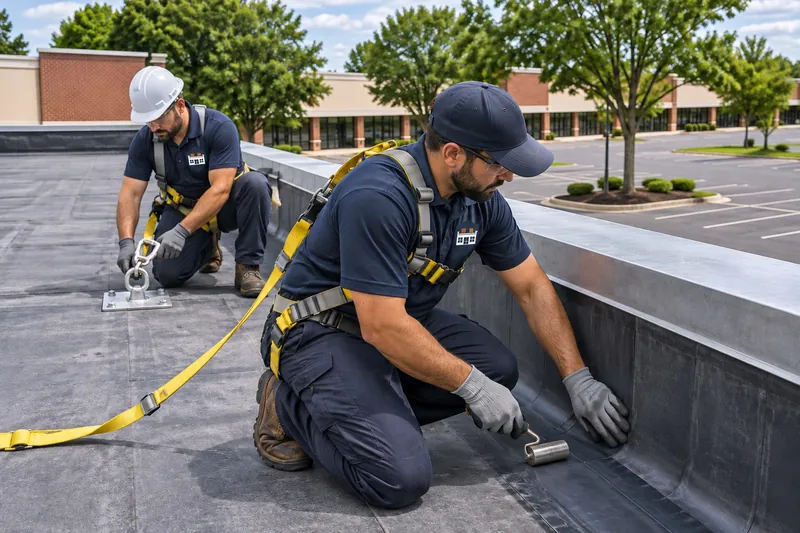
About Flat Roofs
A flat commercial roof is never truly flat. It needs a slight slope toward interior drains, scuppers, or gutters, and when that slope is missing or the drains sit too high, water collects in low spots and stays for days.
Louisville flat roofs include old built-up roofs with gravel, modified bitumen, and newer TPO and EPDM. The drainage fixes are similar on all of them: clear and reset the drains, then build slope where the water has nowhere to go.
Related Services
These services cover the rest of what flat roofs need over their life.
Spring and fall drain clearing keeps flat roofs from ponding again.
DetailsPonding, drains, and the choice between repairing and rebuilding a flat roof.
Roof Condition
Yes. On Louisville flat roofs we clear and reset drains, add crickets or tapered insulation that slope water toward the drains, and replace sagging deck sections when that is the cause. Water still standing about 48 hours after rain is the usual trigger to fix it.
A built-up roof is worth repairing when the blisters and splits are limited and the insulation underneath is dry. Core samples tell us. If moisture runs between the plies across much of the roof, a new single-ply or modified bitumen roof is the better choice.
Membranes and Systems
Look at the roof a day after a good rain. Water should be gone or close to it, with no dark rings or dirt lines around the drains. Lines and standing water mean the drain or the slope needs work.
For most Louisville flat commercial roofs, a single-ply TPO or EPDM membrane over new tapered insulation is the common choice. Modified bitumen fits roofs with heavy foot traffic. The deck, drainage, and equipment on the roof decide which one we recommend.
Planning the Work
Leaks that show up only in heavy rain usually point to drainage. Water backs up past clogged or undersized drains and reaches flashing, curbs, or seams that stay dry in light rain. Clearing the drains and checking the flashing heights at walls and curbs fixes most of these.
Gravel is swept back around the repair area so the plies can be cleaned and patched, then spread again to protect the surface. During a tear-off, gravel comes off with the old roof.
Next Step
Send the address and photos or notes about where water sits. We will map it, find the cause, and price the fix.
Roof Leaking or Wearing Out? Have Us Call You
Leave a name and number to talk about your roof.
Thank You. Your Request Is In.
We have your name and number and will call you about the roof. To talk now, call (502) 293-5786.
Or call (502) 293-5786